
Half Light, 2026 36x 44 inches Collage, watercolour and gouache on handmade paper. $2000 Half Light reflects my practice of painting through experience, exploring how observation, memory and a sense of place shape our relationship with landscape. The collage merges two paintings of my home on the north shore of Lake Ontario, bringing together the shoreline and the conservation land beyond my backyard. Photography is integral to my process, capturing fleeting impressions of light, water, trees and seasonal change as the landscape shifts from winter toward spring. Looking south across the lake, I am increasingly aware of political tensions and threats to Canadian sovereignty, challenging my sense of security and belonging. Through overlapping perspectives, Half Light transforms observation into a landscape that explores the relationship between home, continuity, vulnerability and uncertainty.
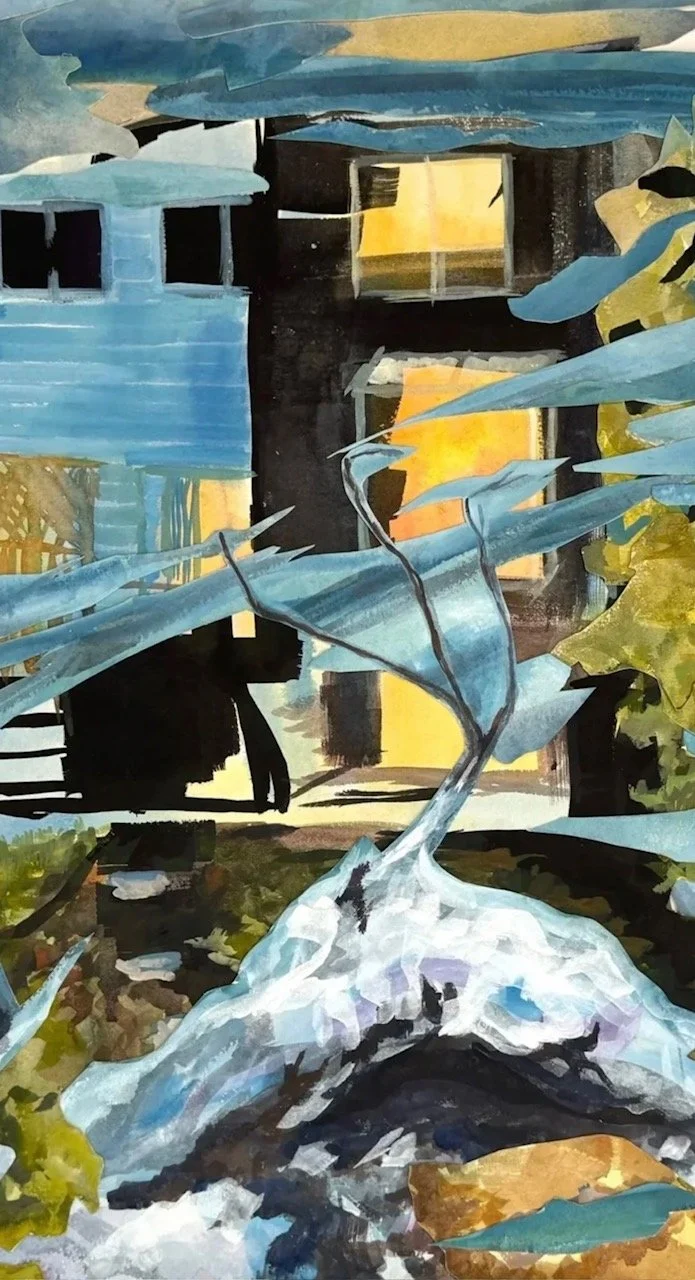
Detail - Half Light refers to the threshold between day and night—a fleeting moment of transition. The painting is composed of two merged photographic images of my backyard on the north shore of Lake Ontario, captured between winter and spring, when the landscape is suspended between dormancy and renewal. This state of being "in between" becomes a metaphor for transformation, connecting seasonal change with my reimagining of the Canadian landscape tradition. By combining documentary observation with poetic interpretation, I invite viewers to see the landscape not as untouched wilderness, but as a living archive shaped by ecological processes, memory, and human presence.
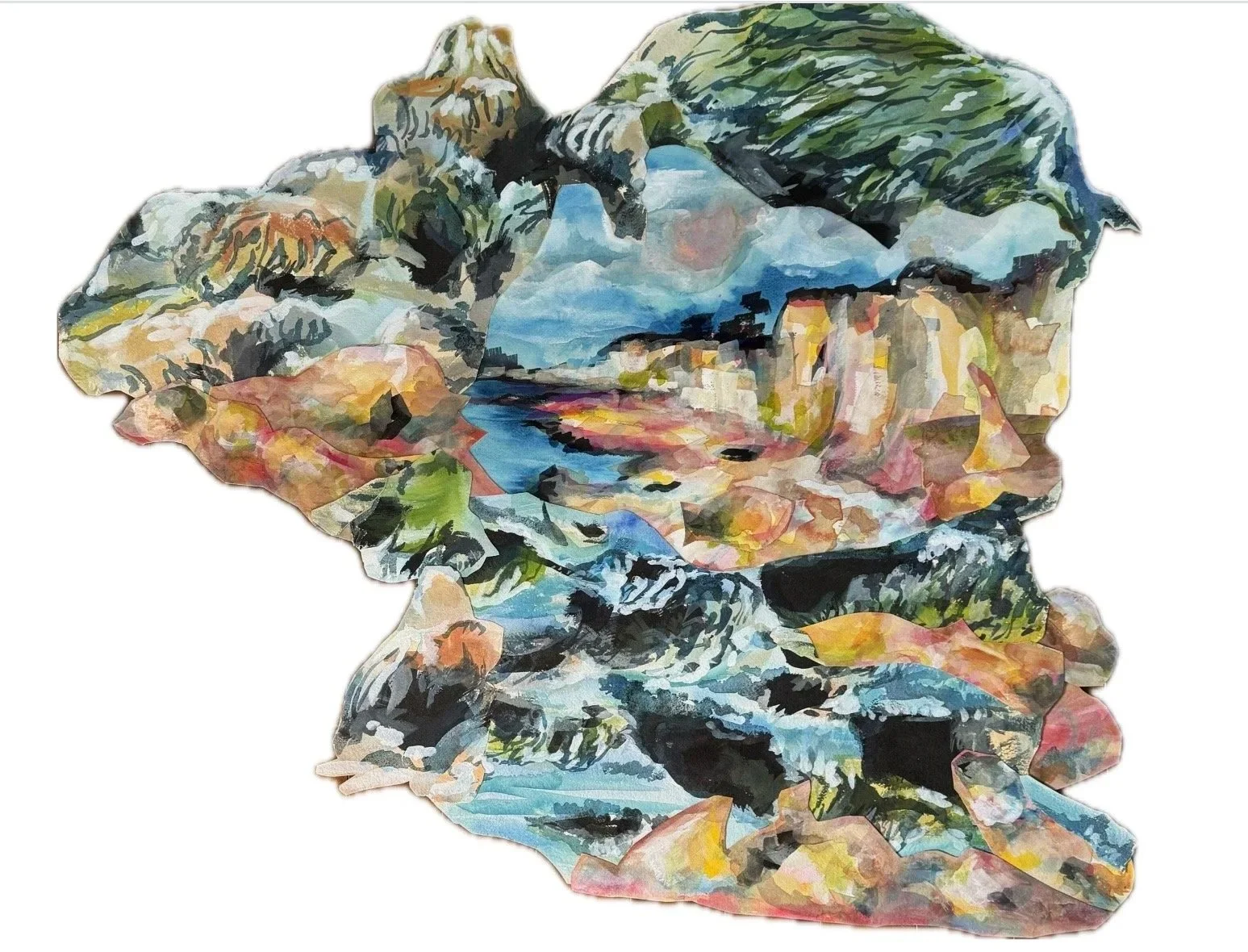
Falling water, 2026 Collage watercolour, gouache and ink on handmade paper. 41x 47 inches. $2000 Falling Water reflects the spirit of Tradition Transformed, an exhibition at the Orillia Museum of History and Art, established in recognition of Franklin Carmichael, renowned Canadian landscape artist and member of the Group of Seven, who was born in Orillia. Inspired by Northern Ontario’s distinctive landscapes, Carmichael captured their character through painting and watercolour. Building on this legacy, Wallace reinterprets the Canadian landscape through her own experiences, photographic observations, and exploration of an environment in continual transformation. Bringing together two paintings of the Lake Ontario shoreline, Falling Water merges the cliffs and water’s edge into a single, compressed landscape. Wind, rain, fluctuating lake levels, and erosion continually reshape the shoreline, challenging the idea of landscape as fixed or timeless. By combining multiple perspectives, Wallace moves beyond direct observation to explore landscape as a lived experience shaped by natural forces, human perception, memory, and time. The cliffs along Lake Ontario also evoke a parallel with the White Cliffs of Dover, a landscape deeply associated with British identity and the threat of invasion during the Second World War. For Wallace, this connection carries a contemporary resonance. As a Canadian living on the north shore of Lake Ontario, she is conscious of the unease created by the perceived threat from the United States. This awareness brings new significance to the familiar shoreline and to the expansive body of water that both connects and defines national boundaries. The landscape becomes more than a natural feature; it represents a threshold between security and uncertainty, proximity and separation, belonging and vulnerability. Through this parallel, Wallace explores how landscapes acquire meaning through the histories, anxieties, and experiences of those who inhabit them. The cliffs endure, yet their forms are continually reshaped by erosion, just as the meanings attached to a place shift with changing circumstances. In Falling Water, the shoreline becomes both subject and metaphor, reflecting the fragile relationship between land, identity, and the forces that shape our sense of belonging. Photography is integral to Wallace’s painting process. Drawing from her observations of places and spaces throughout southern, central, and eastern Ontario, she constructs compositions that transform experiential reality into layered interpretations of landscape. Her paintings reveal narratives shaped by memory, history, human presence, and the natural environment, bringing forward the emotional and cultural dimensions of the relationship between people and the land. By merging photographic observation with memory and interpretation, Wallace reconsiders the Canadian landscape tradition through a contemporary lens, where familiar places become sites of reflection on change, history, and belonging.
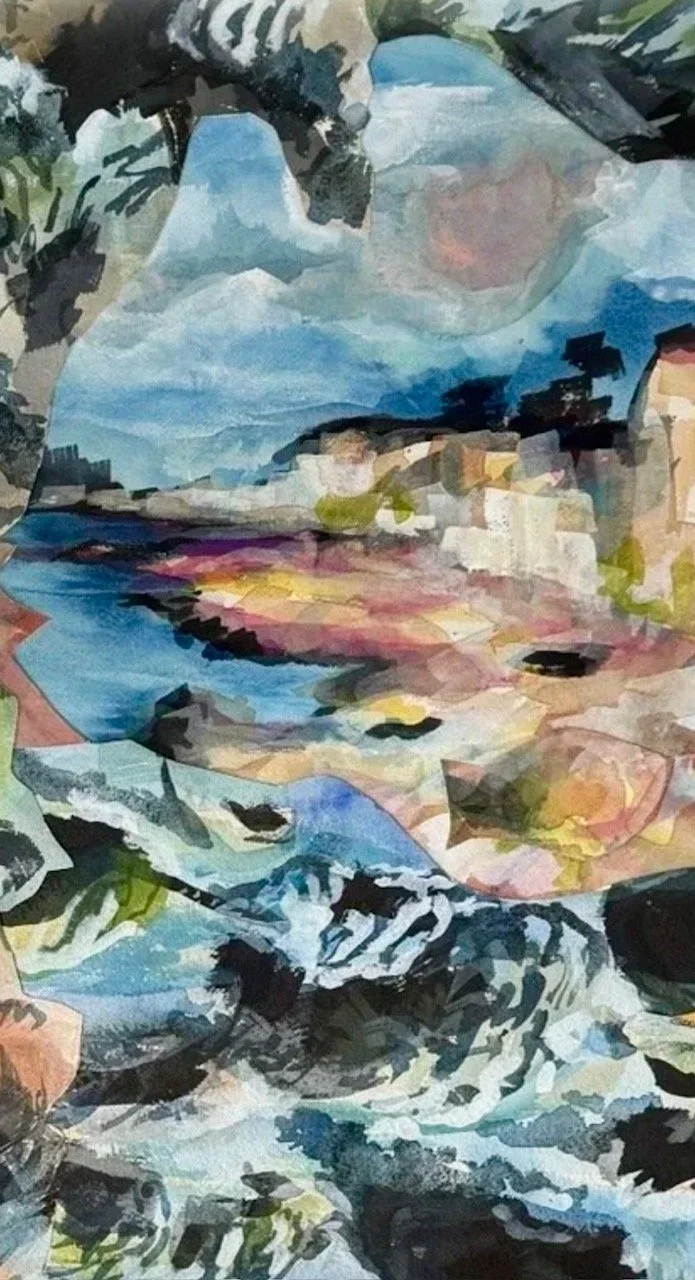
Detail - Falling Water is composed by merging two paintings of the Lake Ontario shoreline, bringing together the cliffs and the water's edge into a single landscape. The shoreline bears the evidence of continual transformation, shaped by wind, rain, fluctuating lake levels, and the gradual erosion of the cliffs. By compressing multiple perspectives into one image, the painting moves beyond documentary observation to reimagine the Canadian landscape tradition as an evolving record of environmental change. Rather than presenting the landscape as fixed or timeless, Falling Water reveals it as a place in constant transition, where natural forces continually reshape both the land and our understanding of it.

Muskoka Time, 2025 Collage watercolour, gouache and ink on handmade paper 35 x 45 inches $2000

Detail- Muskoka Time merges two paintings derived from trail camera images captured at my second home along the Muskoka River, blending morning and afternoon into a single composition. By collapsing separate moments into one image, the work blurs the passage of time while documenting the rhythms of life along the river. This layered approach transforms the tradition of Canadian landscape painting from a single, fixed view into a more fluid experience of place, where memory, observation, and the changing cycles of nature coexist. Rather than recording one moment, Muskoka Time reflects the landscape as it is continuously experienced and transformed through time.

Waves of Perception, 2026 10.5 x 12.5 in. Collage, watercolour and gouache on paper. $200 Available Gerrard Art Space

This collage is constructed from images, cut pieces from where the wild grapes grow on lake Ontario and a mother tree stump underwater covered by ribbons of light and sky reflection on the Muskoka River. Connecting two body of waters, from above and below the surface. Considering the visual plane as a sphere altering the horizon line distorting the reality of the landscape picture plane.
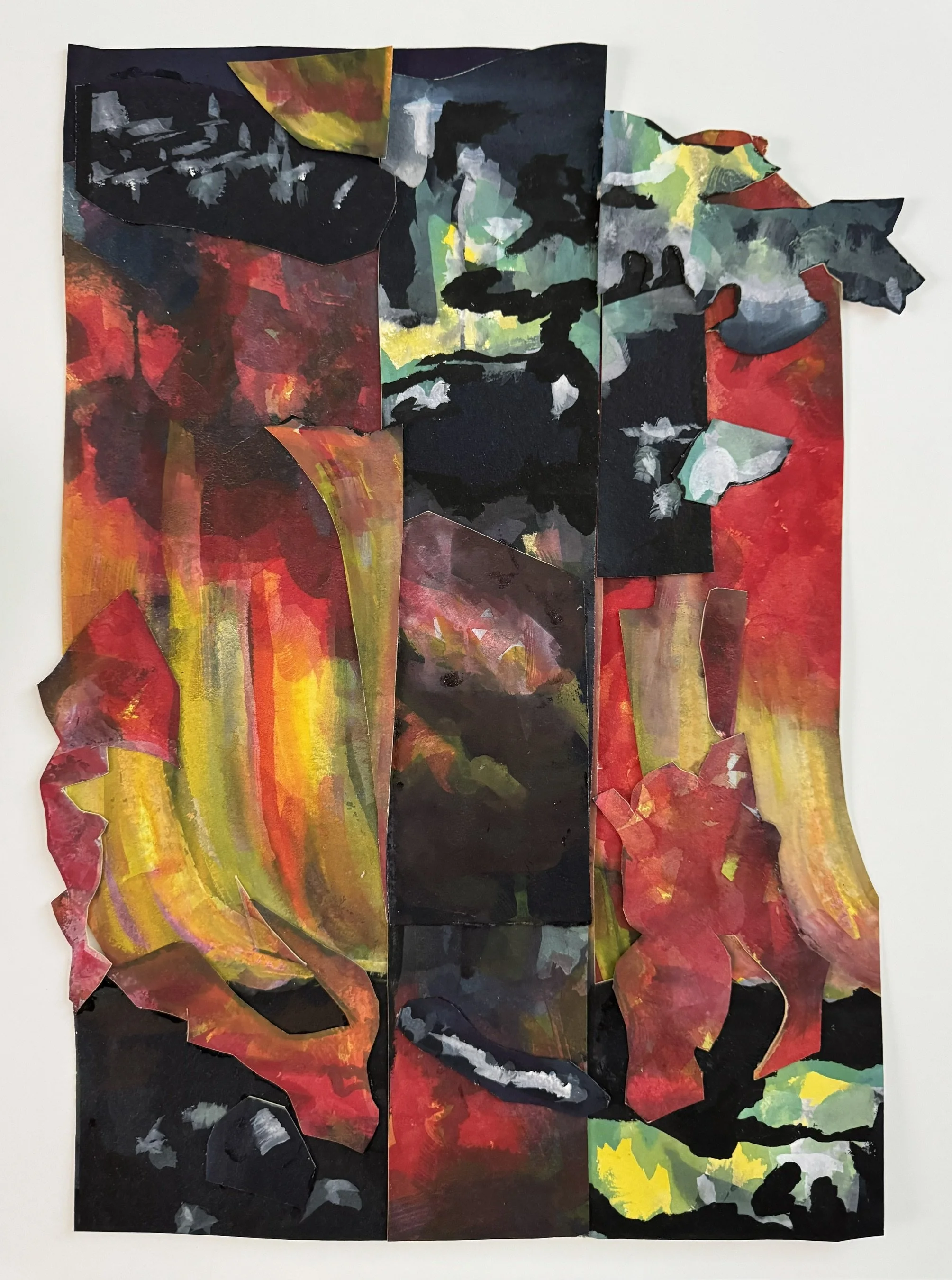
Reverse Flow Collage, watercolour and gouache on handmade paper. 16 x 20 inches $400

Mount Muskoka, 2026 16 x 20 in. Collage, watercolour, goauche and India Ink on paper. Premier exclusive available at Solstice Exhibition, Saturday June 20, 10-3pm

Detail-Muskoka since the late seventies has endured ever increasing light at night by new development. In this reconfigured painting a full moon combined with interior lights of cottages and homes shoot across the river surface at night. These lights and reflections become refracted distorting visual reality turning. If I have trouble seeing what is real, I wonder how all the creatures of the forest maneuver this invasive distorting light. I reconfigured the composition manipulating the moon light with artificial light rotating and flipping the horizon and shapes creating an image that has multiple horizons, reflecting the confusion and distortion of light when it is meant to be dark.

Framed 16 x 20 inches. Depth 1.5 inches. Recycled Plastic Canadian Made

Muskoka Reflections, 2026 5 x 17.5 in. Collage, watercolour and gouache on paper. $200

Funnels, 2026 Collage, watercolour and gouache on paper. inches. $120

11. 8 x8 inches. Collage, watercolour and gouache on paper.